
Peyto Lake, Canadian Rockies Photography Hot Spot
The Canadian Rockies are truly a photographer’s paradise.

PEYTO LAKE – A TOP CANADA PHOTOGRAPHY SPOT

Editorial Update: January 1, 2026
Photography Location Guides & Essential

Pamela Goodyer, a renowned photographer, has curated the best Canada photography locations, and Peyto Lake is one of them. This is one of the top photography spots in Canada. We go here every year. We run a photography tour to the Canadian Rockies.

Article is not AI generated. We traveled here showing Pamela Goodyer and her camera.

Pamela Goodyer has been guiding photographers to the best photography spots in the world for over fifteen years.

Location:
Along the Icefields Parkway (Highway 93N), between Lake Louise and Jasper.
Parking: A designated lot is available, but it fills up quickly in peak summer; arrive early or late. It is about a 10-15 minute walk. There are two lots.

What to Expect:

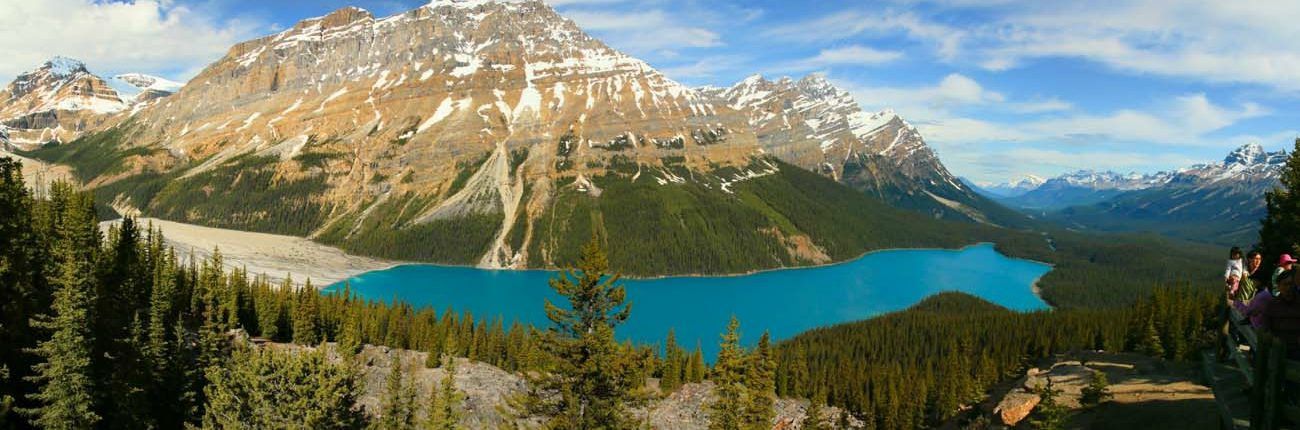
  • Iconic View: A glacier-fed lake known for its brilliant turquoise color.
  • Easy Access: A short, well-maintained trail leads to the viewpoint from the parking lot.
  • Crowds: It’s a popular spot, so expect many other visitors. The parking lot can fill up quickly.
  • Best Time for Photography: Early morning.
  • Best Season: The summer months (late June to early September) when glacial meltwater is highest.
  • Recommended Gear: A wide-angle lens is a must. A polarizing filter can help reduce glare and enhance the cloud and sky contrast.
  • Photography: We always shoot vertically and stitch multiple images together.
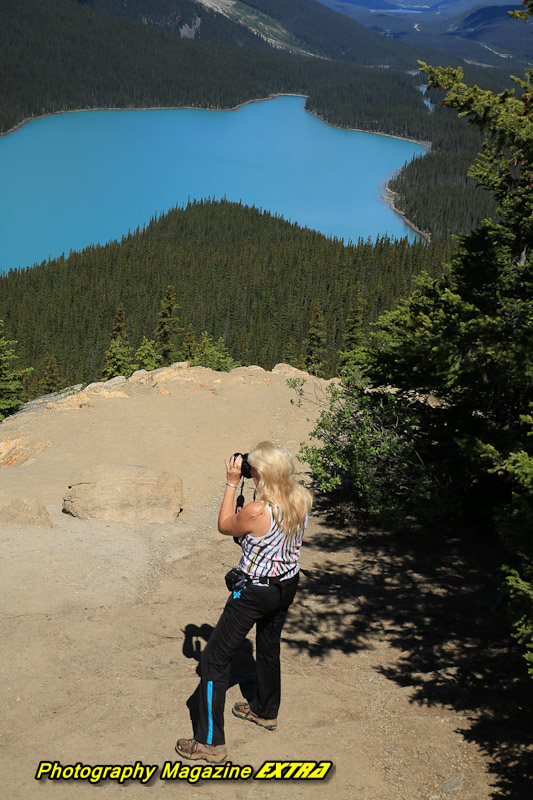
Pamela Goodyer at Peyto Lake

Photography Magazine Extra owner, internationally acclaimed, award-winning photographer Pamela Goodyer, taken by Tom Gross on the Extra Eyes Photo Tour that she runs.

Peyto Lake Photography

Can you see the wolf image in the lake?

Peyto Lake is a natural wonder located in the Canadian Rockies. It’s renowned for its beautiful blue waters and picturesque setting. Peyto Lake photography is a popular activity for both tourists and photographers. The lake is easily accessible from the nearby town of Banff, making it a popular spot for day trips.

Peyto Lake photography offers incredible views of the lake and surrounding mountains. The best time to photograph the lake is in the early morning or late evening when the sun is low in the sky and casts a beautiful golden light on the water. Peyto Lake is also renowned for its genuinely incredible sunsets.

Whether you’re a seasoned photographer or just starting, Peyto Lake Photography will give you some amazing shots you’ll cherish forever.

This lake is a stop along the Icefields Parkway, but it is not a location from which you will get many different images. There is an overlook that you can walk down to from the parking lot to view the lake.

We don’t have many images here because this is the main area. If you can’t walk up the steep road, park in the upper parking lot.

You must stitch your images together here, even with a wide-angle lens. You do not have to be on a tripod to do that.

There were some trails, but we had yet to adventure down them toward the lake to see what we could find. Maybe this year, when we return in June, we will explore.

The main image above was photo-stitched. We took five shots vertically and stitched them together. If you are unsure how to do this, join us on a photo tour, and we will teach you how! Either way, know how to do this before photographing this magnificent location.

Lens: Wide Angle

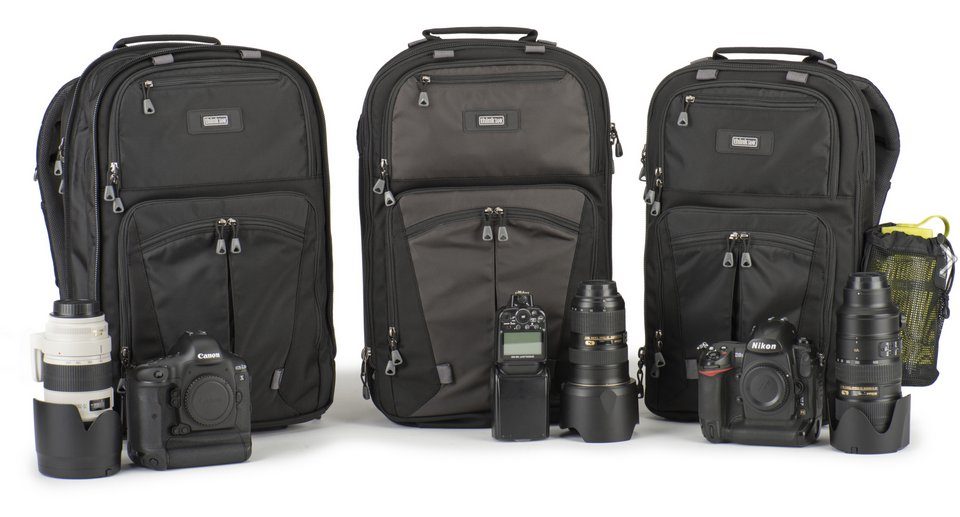
Gear List at a Glance: Circular polarizing filter, wide-angle lens.

When to Go: Call ahead in winter to see if they are open. We like Fall the best.


MANUAL MODE

If you walk down to the lake, you might have slightly moving waters. If the water splashes or moves a bit, you can do your long-exposure running and milky water shots. You will have to use a tripod for this effect. Your settings will vary depending on the lighting and your neutral density filter.

You will shoot in manual mode for the milky waters. ISO is always 100 or as low as your camera will allow. The aperture is f/22. Your shutter speed will be the only variable, depending on the light. Roll your shutter speed until your meter reads zero. (In the center)  Use your shutter release or your 2-second timer to prevent camera movement when exposed. You will want at least a 2-second exposure for milky water.

If you don’t have a neutral density filter, you may not get more than 1/15th of a second in the sun. 

private-jet-photo-tours - plane

Peyto Lake – During the summer, significant amounts of glacial rock flour flow into the lake, and these suspended rock particles give the lake a bright, turquoise color. Because of its bright color, photos of the lake often appear in illustrated books, and the area around the lake is a popular sightseeing spot for tourists. The lake is best seen from Bow Summit, the highest point on the Icefields Parkway.

The lake is fed by Peyto Creek, which drains water from Caldron Lake and Peyto Glacier (part of the Wapta Icefield). Peyto Lake originates from the Mistaya River, which heads northwest from the lake’s outflow.

The Canadian Rockies are one of the world’s most awe-inspiring natural wonders. Carved by glaciers and home to some of the tallest mountains on the continent, the Rockies stretch for over 3,000km across western Canada.

Whether hiking through alpine meadows, exploring ancient forests, or marveling at towering peaks, there’s always something new to discover in the Canadian Rockies. And with so much to see and do, it’s no wonder this region is one of Canada’s most popular tourist destinations.

If you’re looking for an adventure, the Canadian Rockies are the perfect place to find it. From climbing to wildlife watching and camping, there’s something for everyone in this wild and beautiful part of the world.

error: Content is protected !!