









GHOST HUNTING PHOTOGRAPHY

TABLE OF CONTENTS
- About Ghost Hunting
- Ghost Hunting How-To
- Where to Ghost Hunt
- Prepare Before You Go
- Link to Ghost Hunting Locations
- How to Shoot Ghost Hunting Photography
- Camera Gear
- Camera Settings
- Focusing in the Dark
- After the Hunt
- Ghost Hunting Terms
PARANORMAL PHOTOGRAPHY
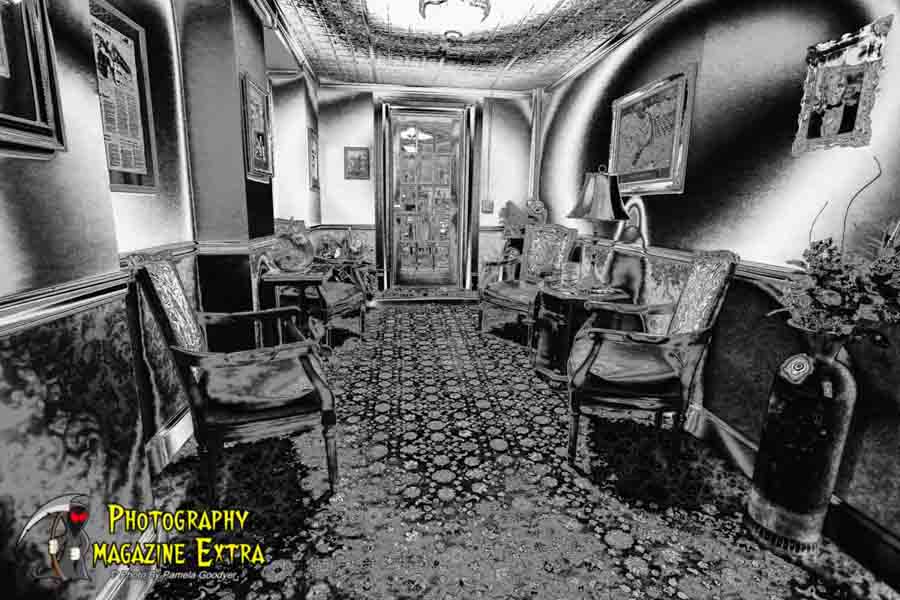
Paranormal photography has been controversial since the 1800s. It includes capturing paranormal phenomena in images. We are searching for documenting and showing evidence of ghosts, orbs and apparitions, ectoplasms or vortexes, and anything not of this world in our pictures. Many people dismiss paranormal photography and videos, but they can still be considered a legitimate field of study. Inexplicable images such as orbs, ectoplasms, or vortexes appear in many photographs during our hunts.
OUR OTHER GHOST HUNTING RESOURCES
Check out our “How to Shoot Ghost Hunting Photography Page,”
You can also view our “Ghost Hunting Photography Hot Spots for a blood-curdling good time.” You can also see the link for each article below.
Don’t forget to protect yourself when you go ghost hunting. Command all beings to stay behind and not follow you home. This page will give you all the information you need to master finding apparitions in your photography with a DSLR. You don’t need all the other kinds of fancy gadgets.
SOME OF OUR FAVORITE GHOST HUNTING ARTICLES
GHOST HUNTING PHOTOGRAPHY: HOW TO
Embarking on a ghost hunting photography excursion is not for the faint of heart. It can be a dreadful adventure with the potential to capture spine-chilling images of the spirit world. To prepare for this daunting task, we have compiled a list of pointers and step-by-step instructions on capturing otherworldly entities through your camera lens. Brace yourself for an experience like no other as you delve into the realm of the unknown and attempt to document the unexplainable.
WHERE TO GHOST HUNT
CHURCHES
Old churches are always a good option for ghost hunting; paranormal activity is usually found in the graveyards attached to the churches—our article of the old tenant church, where the church and cemetery are massively haunted.
GRAVEYARDS
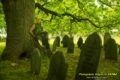
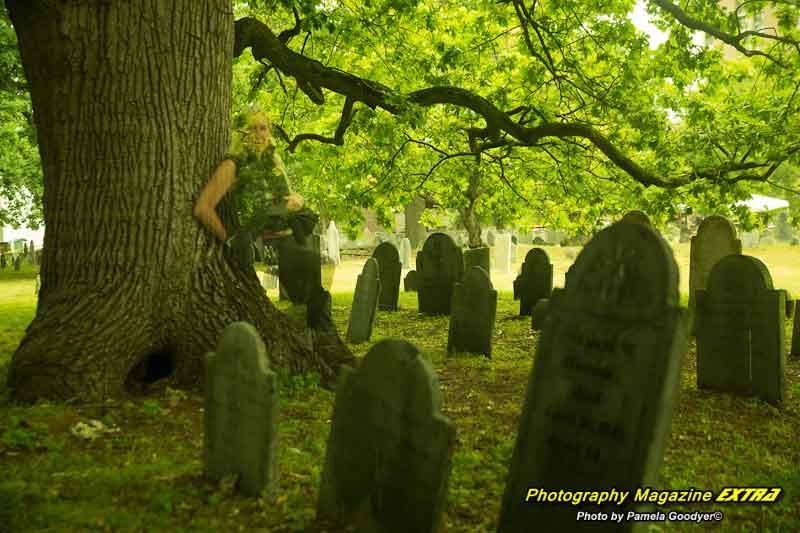
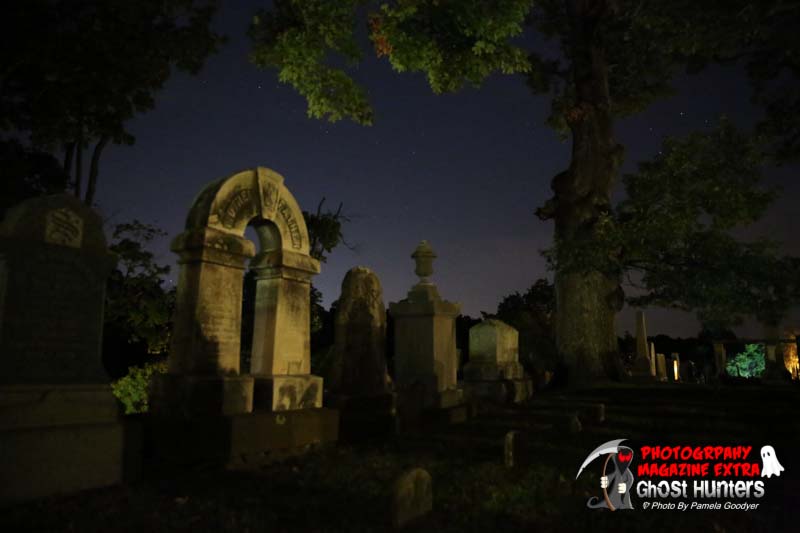
As the clock ticked closer to midnight, the air grew colder, and a mist began to form over the graveyard, swirling around the stones like a spectral caress. The sensory alteration that comes with this environment only heightened the ghost-hunting experience.
Graveyards are naturally associated with death and the hereafter, which mentally predisposes visitors to expect encounters with the supernatural. This psychological setup is a powerful catalyst for ghost hunting; it amplifies every sound and movement, transforming the ordinary into the potentially paranormal. Moreover, gravestones and crypts often bear dates and names that serve as tangible connections to the past.
BATTLEFIELDS
The remnants of old battlefields hold more than just memories. A hauntingly active landscape lies in the northeastern United States, where the soil has soaked up centuries of struggle and bloodshed. From the rolling hills of Princeton in New Jersey to the surrounding countryside – all once touched by the flames of revolution – these sacred grounds are known for their eerie paranormal activity. Having ventured to a few such sites ourselves, we can attest to the chilling presence that still lingers, an inexplicable energy that seems to defy time.
HISTORIC SITES
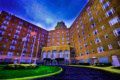
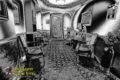
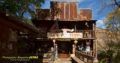
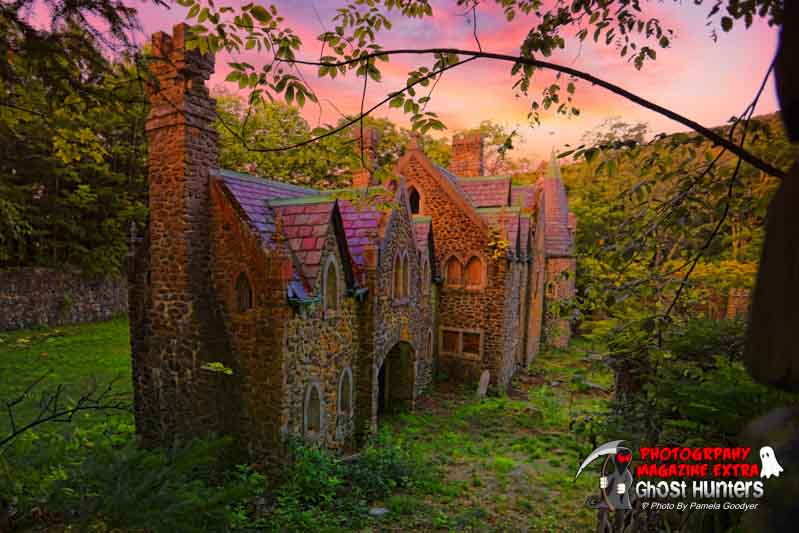
The old, weathered buildings loomed in the darkness, their stone walls and ancient architecture giving off an eerie vibe. These historic sites, brimming with centuries of history and tales of the past, were perfect locations for ghost hunting. The creaking floors and whispered voices added to the spooky atmosphere, making it almost too easy to believe in the paranormal. Every corner held a hidden story waiting to be uncovered, and these old sites never failed to deliver chills and thrills to those brave enough to explore them. Whether it was the remnants of a long-gone civilization or the abandoned ruins of a once-grand estate, each location had its unique energy that beckoned the curious and daring. And as night fell and shadows danced on the walls, there was no doubt that this was where ghosts roamed free, and spirits lingered in the afterlife.
OLD HOTELS
There is a plethora of reputedly haunted hotels in every state. We have visited numerous ones and witnessed paranormal occurrences at well-known locations. The internet is filled with articles detailing the whereabouts of these haunted hotels, listed for each state.
PREPARATIONS BEFORE YOU GO
Mentally, preparing yourself to face the unknown is a daunting task. It requires acknowledging that you may not always find what you’re searching for, and in some instances, you may come across unexpected discoveries. You must be willing to confront your fears and push past uncertainty, knowing that the journey ahead may hold challenges and rewards beyond your expectations.
As you arrive, set up a strong barrier against all evil spirits. Let them know with commanding authority that they are not welcome here and must stay away. This is a powerful and essential task for ensuring the safety and protection of all who enter this space. Be diligent and persistent in your efforts, leaving no room for any malevolent force to penetrate our boundaries.


CLICK THE GHOSTS TO ENTER IF YOU DARE
GHOST HUNTING PHOTOGRAPHY BASICS
WHEN TO GO:
Any time is sufficient, but traditionally, the best results have been documented after 9 p.m.
A DSLR CAMERA:
A DSLR camera can be used for Ghost Hunting Photography but cannot see completely in the dark. You can use a red light to illuminate the area or bring a flashlight for focusing. If you can stand the insidious invasion of the paranormal, you can quickly obtain apparitions in your photos.
FULL SPECTRUM DIGITAL CAMERA:
It takes quality Full-Spectrum photos and videos. It has been professionally modified to accept deeper Ultraviolet (UV) light spectrum light, allowing pictures deep into the usually unseen light spectrum. It is best used with an external infrared light source.
INFRARED (IR) DIGITAL CAMERA:
These cameras take quality IR photos and video with the convenience and ease of a compact digital camera with a built-in infrared light source.
DSLR CAMERA LENS:
Ghost hunting is a wide-angle lens event, but you ideally need a lens with an open aperture, such as 2.8 or below. The higher-end cameras will allow you to go to a very high ISO with less noise, so they are ideal. If you don’t have a high camera, any camera will do. After all, we are not going for super high-quality images here. We are going for a lot of paranormal activity that we can document. As long as we get evidence, it doesn’t always have to look pretty. Some of our lower-end camera images above are grain-filled, but we got what we were after.
GHOST HUNTING CAMERA SETTINGS
DSLR CAMERA SETTINGS:
For basic DSLR Photography, our goal is to capture activity that is not consistently high quality, but that’s ok—these are ghost photos.
- You must use a tripod when shooting in a dark area.
- Set your camera to manual mode.
- Put your camera on the 2-second timer or use a cable release.
- Set your ISO very high for very dark locations (example: 6400). The higher the number, the more light goes into the camera. You cannot shoot a DSLR in total darkness without some light source, such as a church light, a full moon, or a red light in the back of a room. Again, it’s not always about avoiding grain or digital noise here. ISO 100 is for outdoors in graveyards with decent lighting. See shooting in the dark below.
- Set your aperture to the lowest it will go. (ex. 2.8) to let more light in. If you need some depth of field, set it a little higher. You cannot go much higher in the darkness since the higher the number, the less light will come into the camera. Scroll your shutter speed until the meter reads center zero. You can take some test shots and adjust from there.
- To start, set your shutter speed to about 5 seconds. Then, again, adjust according to the light you have available.
EMF METERS:
Measure fluctuations in electromagnet fields (or EM fields). These fields directly result from electrical appliances in a home, cell phones, power lines outside, and even solar activity and weather fluctuations. Beyond that, a primary theory in the paranormal world is that entities can manipulate these fields to manifest themselves or interact with our world. When your meter goes off, do a long exposure on your tripod.
FOCUSING IN THE DARK:
Now you are set. If you do not have enough light or your camera will not focus, take a flashlight and light up a single subject in the picture. (Don’t blast light all over; you will disturb who you are there to find.) Put the focus point where the camera will focus on the area you have lit up. When you see the camera has obtained focus and the two-second timer starts, turn your flashlight off quickly before the exposure begins. The camera will now take the shot. Set your camera to manual focus without touching the focus ring. Take several pictures without moving your camera. You must refocus the same way every time you do different shots.
Another way to focus on darker areas is to turn on the live view. Hit your zoom button and zoom in on something lit. Expose your image. When you zoom in, the camera can see it better to grab focus. This method only works if you have enough light.
AFTER THE HUNT:
When the hunt is over, meticulously review each photograph, scouring for any evidence that may have been captured. Every detail must be examined with utmost care and attention to ensure no clue goes unnoticed. The case’s fate rests on this thorough examination, so take your time and leave no stone unturned to discern what paranormal activity is and is not.
GHOST HUNTING TERMS
- Apparition — A ghost or ghostlike image of a person.
- Automatism – An action performed unconsciously or involuntarily caused by spirits.
- Banshee – A female spirit whose wailing warns of impending death in a house.
- Collective Apparition—A rare type of sighting in which more than one person sees the same apparition or phenomenon.
- Digital and analog audio recording – Capturing unexplained noises and electronic voice phenomena (EVPs).
- Direct Voice Phenomenon (DVP) – Voices spoken to the Medium at a séance.
- Earthbound – A term referring to a ghost or spirit attached to the earth that cannot leave this dimension.
- Ectoplasm — A supernatural viscous substance. It is supposed to exude from the body of a medium during a trance.
- EMF Meters — Measures the fluctuations in electromagnet fields (or EM fields). These fields directly result from electrical appliances, cell phones, power lines outside, and possible changes in solar activity and weather. Most noteworthy, a theory in the paranormal world is that entities can transform these fields to manifest themselves and events to contact this world.
- Electronic Voice Phenomenon (EVP) – Voices and sounds from beyond are recorded.
- Ghost—A generic term referring to a form of apparition, typically the visual appearance of a deceased human’s soul.
- Ghost Hunting — A research project using various methods and equipment to investigate ghost reports.
- Ghoul — A Demonic or parasitic entity that eats human remains.
- Orb — The term orb describes unexpected, typically circular artifacts in photography—sometimes with trails indicating motion.
- Paranormal — Refers to something beyond the range of everyday human experience or scientific explanation.
- Phantom — It is seen, heard, or sensed but has no physical reality (See Ghost).
- Paranormal Vortex — Some believe a paranormal vortex is a space where apparitions can travel between our world and theirs on the other side.
- Radio Voice Phenomenon (RVP)— Receiving the voice of a spirit through a regular radio.
- Reciprocal Apparition — A scarce phenomenon where humans communicate directly with spirits back and forth.
- Retrocognition — An experience where a person finds themselves in the past and can see events they knew nothing about.
- Shaman — A person who acts as a medium between the visible and spirit worlds. They practice healing and divination and are believed to have control over natural events.
- Spiritual Vortex: — These metaphysical dimensions are said to be areas of energy that enhance psychic abilities and can heal the spirit.
- Spiritualism — The belief system is that the dead can communicate with the living through a medium.
- Vortex — An anomaly that appears in photographs. These images are sometimes thought to represent ghosts, collections of orbs, or gateways that travel to a wormhole in time and space.